About Mosunmola
From Silent Eldest Daughter to Unapologetic Storyteller. A Nigerian-Italian writer and tech professional I’m Sidiqot Abimbola Abale a 35-year-old Nigerian-Italian writer and tech professional, eldest


Today, March 22, 2026, I voted for the first time as an Italian citizen. My first vote in the nine years since I finally received that passport.
It required minimal effort. I walked into a polling station. I cast my ballot on a constitutional referendum about judicial reform. I walked out.
It should have felt momentous. It didn’t.
Because Italian citizenship didn’t save me. It came too late for that.
Let me tell you what it cost to get here.
My mother started the citizenship process for me and my siblings years before we were eligible. She gathered documents in Nigeria within weeks—no small feat. Then she went to the consulate in Lagos and made arrangements with an official who turned out to be a scammer. A “419.” She lost money. Time. Sacrifices I can’t quantify.
The next year, my father—by then an Italian citizen—went to the embassy to follow up. There was no trace of our application in the database. None. As if we’d never existed in their system at all.
This is how the machinery works. Italian bureaucracy swallows you. Nigerian bureaucracy swallows you. And somewhere in between, you disappear.
The memoir asks questions I still don’t have an answer to: How do Italians allow this to happen? How does a system this dysfunctional, this unaccountable, this cruel, continue to operate? Who benefits from keeping it broken?
Here’s what the law says:
If you’re born in Italy to non-citizen parents, you wait eighteen years to become a citizen. Unless a parent gets citizenship first.
If you’re born abroad, a non-EU citizen, above the age of 18, and living in Italy, you need proof of 10 years of continuous residency in the country, with specific income requirements.
If you are a minor and one of your parents is now an Italian citizen, you need 2 years of continuous residency before you can apply. When you turn eighteen before your parent’s citizenship application is granted, you will apply yourself, starting the clock all over again.
You need authenticated documents from embassies. You often pay under the table to get them processed. You submit your application and wait in silence.
I tried to check on my application once. Often, where part of my process was being handled, I never received a response. I felt mocked. I felt the indifference that comes when your name is foreign and your urgency doesn’t register.
A colleague admitted it to me plainly: “We don’t respect foreign names the way we should. And that’s not going to change.”
He was right.
Last June, there was a referendum that mattered to me. Question 5 proposed reducing the residency requirement for non-EU foreigners seeking citizenship from ten years to five.
I couldn’t vote. I’d just returned to Italy, and the registry office was still updating my residency. So I watched from the sidelines as Italians—people who were born into citizenship, who never had to prove they deserved it—decided whether people like me should wait a decade or half that.
The issue of citizenship is central to my memoir. It’s woven through every chapter. The waiting. The anxiety. The rage.
Because when you’re waiting for papers, you can’t plan your life. You can’t apply for certain jobs. You can’t travel freely. You watch your siblings wonder if they’ll get their decree in time to do Erasmus in Korea or see them leaving the nest because they could grab an opportunity somewhere that requires EU citizenship. You compare your wait time to your parents’ six years and feel the bitterness rise in your throat.
You feel ripped apart. Torn in multiple directions. And even now, years after I finally got that passport, when I think about what I went through for those documents, the rage reignites.
Here’s what citizenship bureaucracy does to you:
It teaches you to perform worthiness. To prove you deserve to exist here. To present yourself as the model immigrant—polite, grateful, non-threatening.
It makes you strategic about everything. How you speak. What you say. How you say it. Especially in white spaces. Especially at work.
I used to resent my parents for how rigid they were about family matters, about bureaucratic deadlines, about discipline. Now I realize the system shaped me the same way. I’m inflexible because I had to be. I learned to think schematically, to anticipate how people will react to me, to edit myself constantly.
It’s exhausting. And I don’t want to live like this anymore.
One day, I want to be like my colleagues who say what they think without fear. Maybe even like the men who never have to calculate the cost of their honesty.
But I’m not there yet.
Being the eldest daughter already meant I was judged. Already meant I had to perform. Add Italian bureaucracy on top of that? It was too much. It still is, sometimes.
I carry performance anxiety in my body now. The weight of needing to prove I belong. Of needing to be twice as good to be seen as half as worthy.
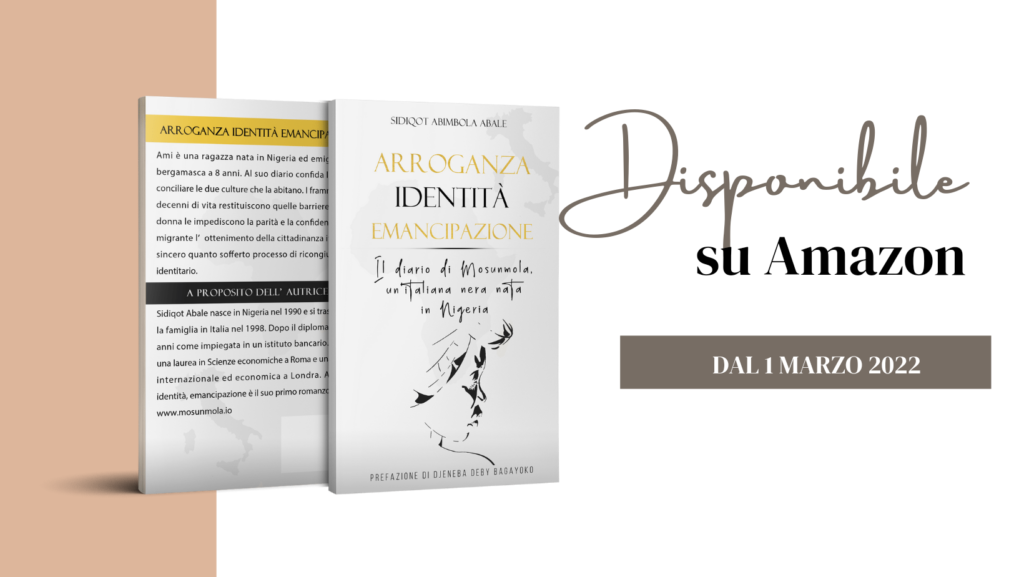
Five years ago, the award-winning Pan-African linguist Djeneba Deby Bagayoko wrote the preface to the first version of my memoir. She wrote: “This morally intact diary shows the complexities, doubts, defeats, multitudes, rarities, joys, and beauties of being who you don’t yet know you are.”
When I first read “being who you don’t yet know you are,” I didn’t fully grasp it. Now I do.
She also wrote: “Finding balance, coexisting with parts of yourself, and living with others while minimizing contradictions—family, friends, nations, institutions that demand we display certain parts of ourselves at the expense of others equally important and fundamental to our identities—is a complex game whose rules are improvised. For years we pass levels and go back, searching for new strategies to understand who we are, when, and with whom.”
This is still where I am. Finding myself. Learning to let go.
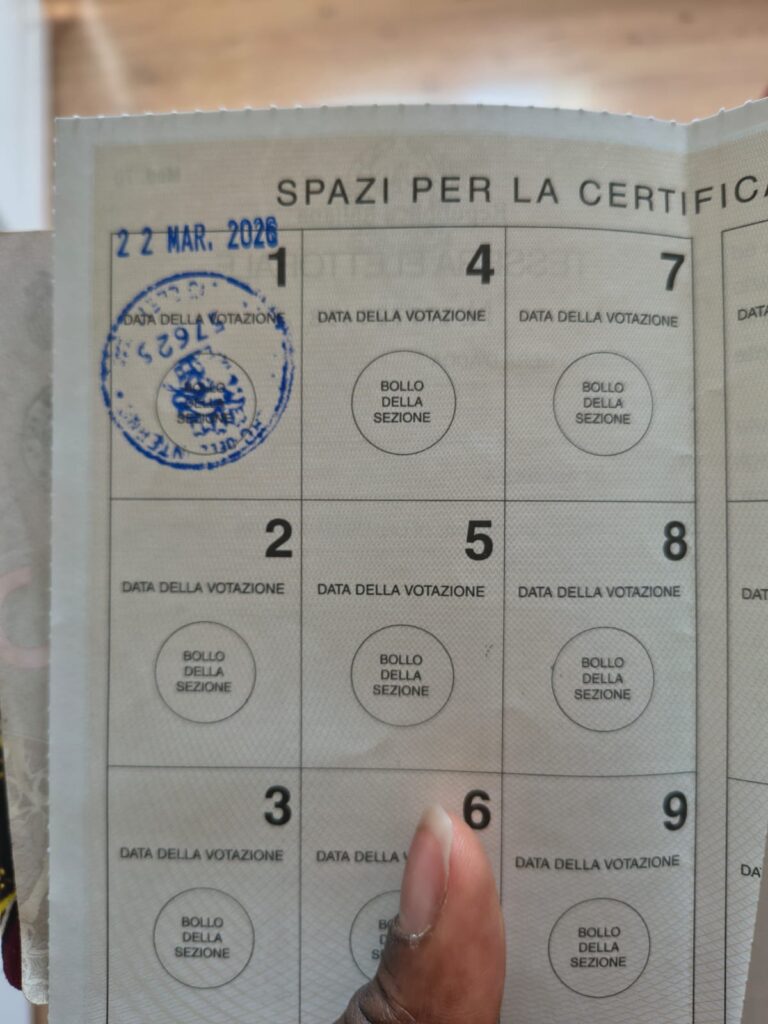
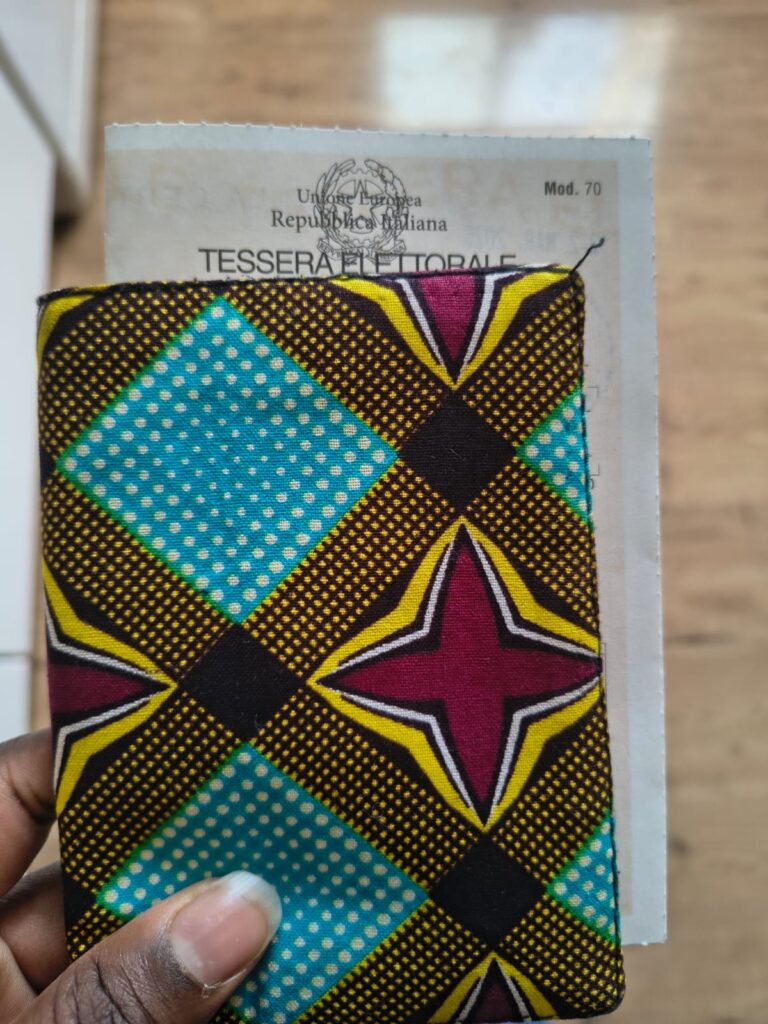
I voted today. I did my civic duty with minimal effort.
But I don’t feel aligned with Italy’s political landscape. I don’t see my ideas represented in the sovereigntist factions that dominate here. I’ll write more about that another time.
For now, I want to say this:
Italian citizenship didn’t save me. It came after years of damage had already been done. After I’d already learned to make myself small. After I’d already internalized the message that I had to earn what others were simply born into.
It didn’t erase the racism I’ve faced as a Black woman in this country. It didn’t undo the trauma—physical and verbal violence at home, sexual abuse, oppressive family dynamics, harmful encounters with institutions and professionals.
This is intersectionality. This is what it means to exist at the crossroads of multiple marginalisations.
Citizenship was supposed to be the answer. The key that would unlock belonging.
But belonging can’t be bureaucratised. You can’t apply for it in triplicate and wait for it to be approved.
The bureaucracy still affects my personal relationships. I wasted so many moments, so many years chasing citizenship. My parents supported me through it—pushing me to meet deadlines, to gather documents, to submit applications. Without them, I don’t know at what step I would have given up.
But it changed how I approach everything. How I live. How I love.
I hate this country sometimes. I hated it enough that if I could have erased it and redrawn it, I would have.
So why did I come back?
I’ll tell you in the next newsletter. I’ll also tell you more about Deby, whose words I’ll never forget.
For now, I’m here. I voted. I’m finding myself.
And I’m learning—slowly, painfully—to let go.
Next week: I’ll share why I returned to Italy after everything, and what Deby’s preface taught me about identity that I’m only now beginning to understand. Sign up below to follow the journey.