My Memoir “What I Couldn’t Say: An Eldest Daughter Between Nigeria and Italy”
For two decades, I wrote in silence. Not for an audience. Not for praise. Just to survive. Coming May 2026 I kept journals hidden behind


For two decades, I wrote in silence. Not for an audience. Not for praise. Just to survive.
Coming May 2026
I kept journals hidden behind bookshelves, folded into suitcases that crossed borders. Each page held what I couldn’t say out loud: shame, confusion, rage, and longing.
This memoir is what happens when the silence ends.
It begins in a small northern Italian town where I was the only Black girl in class, learning early how to shrink and smile. It follows me through adolescence shaped by the burden of being the “strong, responsible” eldest daughter in a Nigerian immigrant family—a role that demanded loyalty at the expense of truth. It travels through years of hiding: hiding abuse, hiding questions, hiding parts of myself that felt too loud, too angry, too much.
This is the story of what it costs to be good. To be grateful. To be the bridge between cultures, generations, and expectations. And what it takes to finally stop performing and start living.
My mother asked me not to write this book. My father doesn’t know I’m publishing it. Parts of my extended family will stop speaking to me when they read it.
I’m telling it anyway.
What You’ll Find Inside
Content Warning: This memoir contains descriptions of childhood physical abuse, sexual abuse, cultural erasure, and family dysfunction. Please read with care.
Excerpt
At 14, I told my classmate Giusy everything I’d been holding inside. Here’s what I wrote in my diary that night—notice how I listed the abuse almost casually, as if it were just another fact about my life:
“Le ho parlato dei miei genitori tiranni, delle mie sorelle, di mio fratello, di mio cugino Gideon che abusa di me, della mia vita. […] Non riuscivo a fermarmi. […] Quando ho finito di raccontarle la mia vita, Giusy è stata zitta fino al suono della campanella.”
“I told her about my tyrant parents, my sisters, my brother, my cousin Gideon who abuses me, about my life. […] I couldn’t stop. […] When I finished telling her my story, Giusy stayed silent until the bell rang.”
I remember writing this with dry eyes. As if it was someone else’s story. Even in my private diary, I was still protecting everyone—minimizing what my cousin had done, calling my parents ‘tyrants’ instead of something harsher. I couldn’t let myself feel it yet. Not even on paper.
Why I Wrote This Book
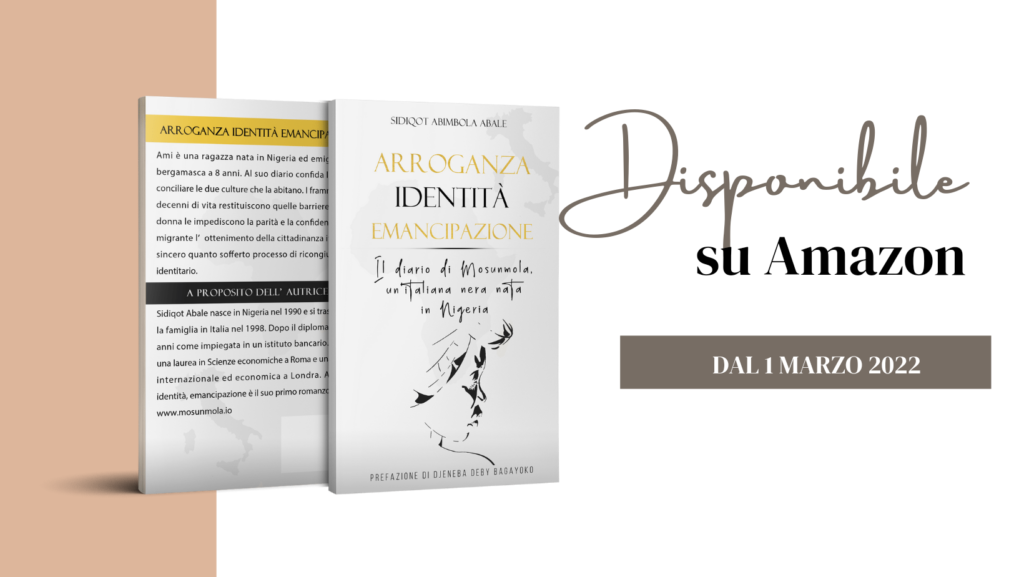
In 2022, I self-published an Italian version of this book. It was raw. Urgent. Honest in places but quiet in others. I hadn’t processed enough to tell the full story. It barely sold. Not because it wasn’t needed, but because I wasn’t ready.
This time, I am.
I’ve worked with editors. I’ve cried with beta readers. I’ve let my voice stretch beyond whispers. This English edition is expanded, refined, and grounded in the healing I didn’t have access to before.
COVER REVEAL
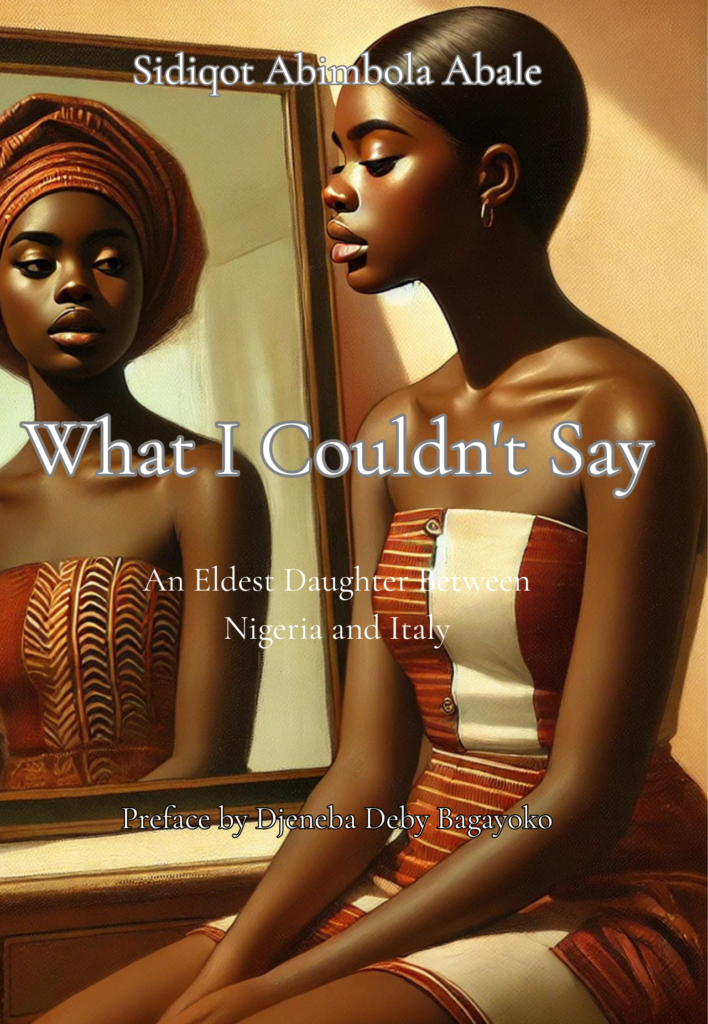
Want to Follow the Story?
Be the first to read new excerpts, behind-the-scenes reflections, and receive early pre-order access.
[Join the Memoir Newsletter]
Book Details
Note: This is a revised and expanded English edition. The 2022 Italian version was self-published with limited editing or distribution. This version includes new material, fuller context, and a more confident narrative voice.
More to Explore
Read the Essays:
Behind the Book:
About the Author
Mosunmola is a Nigerian-Italian writer, eldest daughter, and recovering people-pleaser. She grew up in northern Italy, raised by Nigerian parents who taught her to be grateful, not loud.
Today, she writes about what happens when we stop protecting the stories that hurt us and start telling them instead. Her work has been featured in diaspora anthologies and shared at SOAS University London. This is her first book.
When she’s not writing, she’s working in tech startups, learning to negotiate for herself the way she wishes her younger self could have.
Connect with Me
Newsletter: Join here for exclusive excerpts and launch updates
Email: admin@mosunmola.io
Instagram: @mosunmola.io —Behind-the-scenes writing, book updates, and reflections on identity and belonging
LinkedIn: Sidiqot Abale—Tech career, writing journey, and professional reflections
This Post Has One Comment
Pingback: What I Will and Won't Carry. International Women's Day post -