

What It Means to Be the Eldest Daughter When the World Is Watching
(Part I: Public Version) The first time I understood I was the “eldest daughter,” I wasn’t old. I was eight, standing in our kitchen in
Today is International Women’s Day.
I’m writing this on the nineteenth day of fasting during Ramadan—a fast I began the night I saw the new moon, a day before most others in Italy started.
I’m not here to explain Islam or any other part of my identity. There is plenty of free knowledge available if you want it. What I want to share is how I experience this moment.
I fast because I believe in the meaning of humbling. In remembering the people who live with less. In giving my body a period of restraint and reset. It’s a discipline I choose, not one imposed on me.
And contrary to what my parents taught me growing up, if I feel unwell, I stop.
This isn’t a test of endurance. It’s a practice in listening.
Recently, my father asked me, in that specific way he has:
“You normally fast on the first day, the middle, and the last day of Ramadan. Which means you’re not doing it right now, correct?”
It wasn’t really a question. It was a provocation—a small test disguised as curiosity.
I no longer share my faith status with my parents. Too much of my distance from religion was shaped inside that house. When they accept me as I am, I’ll share with them the way I do with my friends. Until then, my spiritual life is mine.
This, for me, is accountability now.
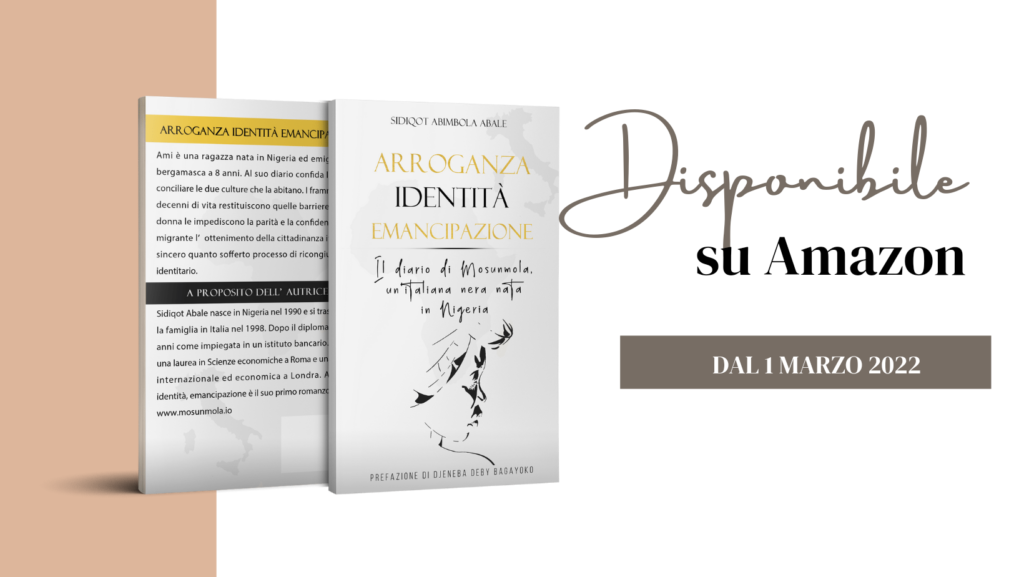
The memoir I’ve been working on for twenty years is called What I Couldn’t Say: An Eldest Daughter Between Nigeria and Italy.
The title isn’t just about the content. It’s about the process.
For a long time, the silence around the book wasn’t only internal—it was structural.
In my twenties, I tried the traditional publishing route. Some agents and publishers expressed interest. Then came the familiar turn: they wanted me to pay. Pay for editing. Pay for representation. Pay to prove I deserved to be heard.
I refused.
I wasn’t willing to worsen my financial situation chasing validation from gatekeepers who expected me to fund my own legitimacy.
That doesn’t mean I was passive in my story. I submitted. I rewrote. I tried to bring the book into the world several times.
But the truth is that the book needed something I couldn’t force: time. Distance. Processing.
Some experiences can’t be written clearly until you’ve lived long enough to understand what happened to you.
It’s hard to practice clarity when you haven’t yet named the harm you survived. You can’t always get it right on the first attempt. That isn’t an excuse—it’s an explanation for why it took me this long to arrive here.
I wasn’t waiting to be rescued by the industry. I wasn’t hoping to casually meet a publisher in a café (I mean, at the beginning I wished it would happen).
I tried to give birth to this memoir multiple times. It just wasn’t ready—and neither was I.
And honestly, this book was never going to be “too late.”
The #MeToo wave and the global reckonings of recent years might make the themes feel timely. But publishing remains an industry that still overwhelmingly centers white voices and carefully selects which Black and Brown stories are allowed through.
So I’m doing this myself.
Partly because I started this story years ago, and I don’t want to dilute the voice of the younger woman who wrote it. The anger. The clarity. The refusal to soften the truth to make it palatable.
If I had followed the traditional route back then, I believe that voice would have been edited out of me.
I’ve sacrificed a lot along the way—time, stability, jobs.
But what I want now is simple: to deliver to readers the voice that first appeared in those pages. The episodes I knew mattered, even when I hadn’t fully processed them yet.
I no longer want to spiral into endless analysis. I don’t want to complicate what was already painful enough to live through.
There are things I cannot control.
What I can control is my honesty.
My timeline.
My terms.
I visited my parents this week. It had been five months since the previous visit.
Something about this time felt different.
I carry fewer responsibilities as the eldest daughter now. Four years of living separately, four years of building boundaries, changes what is expected of me.
But there are still behaviors I will not accept in my presence. I have said this clearly to my parents.
We will see how things evolve. If they don’t change, it may mean I visit less—or stop visiting entirely.
That isn’t a threat.
It’s a boundary.
This is what progress with my parents looks like: slow, uneven, sometimes painful. But necessary.
Accountability, I’ve learned, isn’t only about calling others out.
It’s also about deciding what you will no longer carry.
It is stopping the fast when your body says stop.
Publishing the book yourself when the industry says wait.
Visiting your parents less—or not at all—if that’s what your survival requires.
It is refusing to keep explaining yourself to people who benefit from your silence.
Today, on International Women’s Day, during the holy month of Ramadan, I’m holding myself accountable to the voice that first appeared in the margins of a notebook twenty years ago.
She didn’t wait for permission then.
I’m not waiting now.
Thanks for reading my post. I’m writing a more personal follow-up in next week’s newsletter—about what fasting actually feels like in my body, what happened during that visit home, and the specific boundaries I’m still learning to hold. If you want the unfiltered version of this journey, the parts I’m still figuring out in real time, sign up below. This is where the conversation continues.
(Part I: Public Version) The first time I understood I was the “eldest daughter,” I wasn’t old. I was eight, standing in our kitchen in
From Silent Eldest Daughter to Unapologetic Storyteller. A Nigerian-Italian writer and tech professional I’m Sidiqot Abimbola Abale a 35-year-old Nigerian-Italian writer and tech professional, eldest
The first time I understood that my skin meant something to other people, I was nine. Not in the poetic, “my identity blossomed” way people
This Post Has One Comment
Love